
Forged carbon (C-SMC, C-BMC)
Forged carbon is a composite of chopped carbon fibre bundles in resin, hot-moulded in a steel mould under high pressure. The raw material comes as sheets (C-SMC, carbon sheet moulding compound) or bulk compound (C-BMC). We mould it in a closed volume and under vacuum – with no voids in the part and no flash to trim. We design the parts, the moulds and the process, and then produce the series.
Key parameters
| Typical volume | from a few hundred to over 100,000 pcs/year |
| Moulding time | 2–30 min per cycle |
| Fibre length | typically 12–50 mm |
| Moulding pressure | from several tens to over 100 bar |
| Mould temperature | usually 130–160 °C |
| Moulding | closed volume, vacuum in the cavity – no flash |
| Presses at our plant | 160 t and 40 t hydraulic |
| Waste (CD hollow parts) | approx. 0.5% of part mass |
| Plates | 1–30 mm as standard, 500×500 mm |
Typical, indicative values – they depend on the geometry, material and requirements.
What you can order from us
- Nodes, joints, brackets and 3D connectors with ribs, holes and inserts
- Hollow parts – lighter than solid ones, without bonding halves (patent pending)
- Replacements for machined aluminium parts
- Composite plates 1–30 mm (500×500 mm) in forged carbon, carbon, aramid, glass and their combinations
| Materials | C-SMC and C-BMC with carbon fibre in epoxy resin |
| Typical volumes | from a few hundred to over 100,000 pcs/year; prototypes machined from plate |
| At our plant | 160 t and 40 t hydraulic presses, 5-axis CNC mill, paint shop |
| For a quote send | a 3D model or drawing – or a description and sketch, the requirements and annual quantity |
| Example | Hollow forged carbon parts |
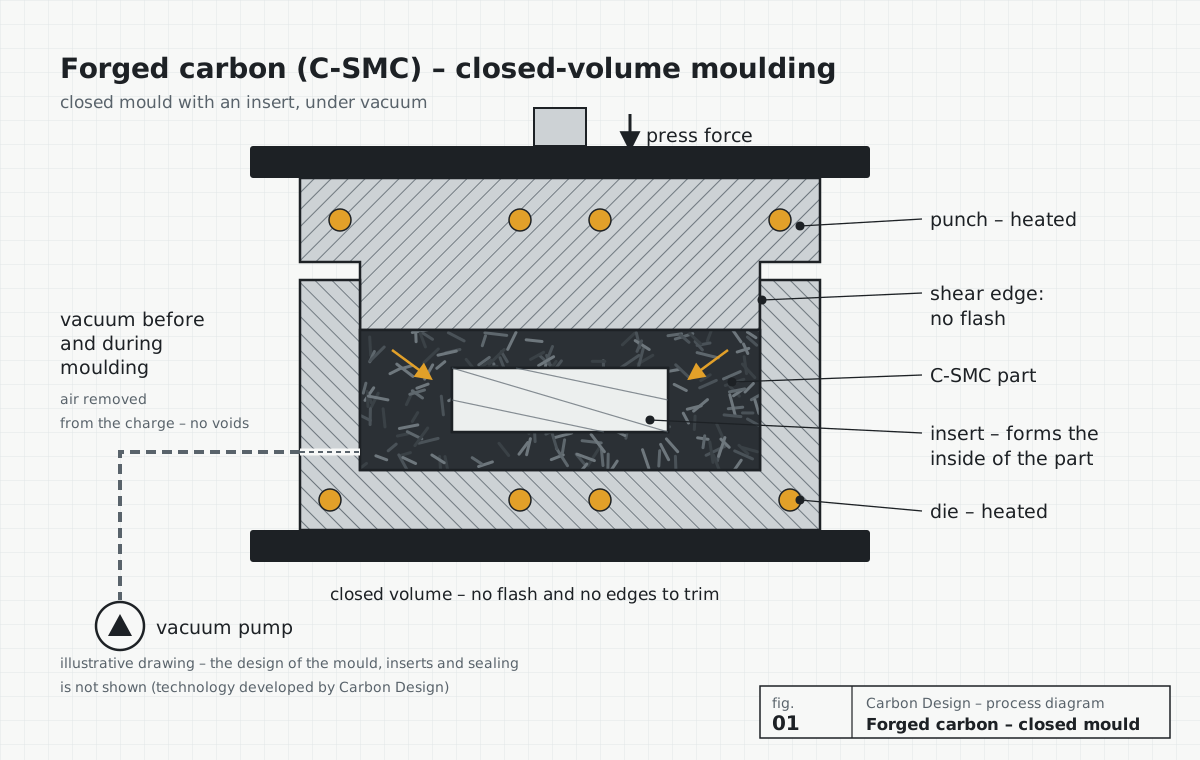
Closed-volume moulding under vacuum
We mould forged carbon parts in a closed mould. The cavity is sealed, vacuum is connected before the material starts to flow and is held during the whole moulding. Air escapes from the charge, so no air bubbles stay in the part. We can confirm laminate quality with a microscope cross-section.
The material fills only the cavity and has nowhere to flow out, so no flash forms. There are no zones to trim afterwards into which fibre would escape. That means less machining after moulding and a better part – also at the edges.
| Moulding with flash | Carbon Design: closed volume and vacuum | |
|---|---|---|
| Mould cavity | excess material flows out at the edges | closed – the material fills only the cavity |
| Air in the charge | partly escapes, risk of voids | removed by vacuum before and during moulding |
| Fibre at the edges | some fibres escape into the flash | stays in the part |
| Machining after moulding | trimming the flash and finishing the edges | no flash to trim |
What makes our forged carbon different
We have developed – as the first in the world – a series method for making hollow, high-strength forged carbon parts in which the fibres are not cut or shortened, which preserves the strength of the part. A patent application has been filed for the method. The part is made in one process, without bonding halves, and the material waste is about 0.5% of the finished part mass.
We also produce 500×500 mm composite plates: in forged carbon, and also carbon, aramid and glass plates and any combination of them. The standard thickness is 1 to 30 mm, and plates over 100 mm thick are technically possible. The plates are used for CNC machining and as a semi-finished product for fittings, technical parts and premium finishes – from automotive and motorsport to yachts and interior design.
When to choose it
- The part has a complex 3D shape: ribs, holes, inserts, varying wall thickness
- You are replacing machined aluminium and want to cut mass and machining cost
- A series of hundreds or thousands of parts a year justifies a steel mould
- Appearance matters – a marbled structure without paint or under a clear coat
- You need a hollow part, lighter than a solid one, without bonding halves
When another process is better
- Maximum stiffness in one direction is required – UD prepreg (autoclave or PCM) is better
- The part is a large, thin panel over about a metre – consider light RTM (LRTM) or infusion
- You need 1–5 prototypes – machining from plate or prepreg on a composite mould is faster and cheaper
How a forged carbon part is made
We use the same sequence for solid and hollow parts; the insert and the charge preparation differ.
- Part design for moulding: draft angles, radii, thicknesses, insert locations.
- FEM analysis taking into account the quasi-isotropic properties of the chopped material.
- Moulding simulation in Moldex3D with the Fiber module: mould filling, fibre orientation and warpage – design and simulation.
- Design of a temperature-controlled steel mould in NX Mold Wizard and supervision of its manufacture.
- Charge preparation: mass and placement of C-SMC sheets or C-BMC compound in the mould.
- Closing the mould and connecting vacuum – air is removed from the cavity before the material starts to flow.
- Hot moulding in a closed volume and curing – from a few to several tens of minutes per cycle; vacuum is held until the end of moulding.
- Finishing without flash trimming, insert fitting and painting, then dimensional and laminate inspection.
Properties and comparison
Chopped fibre lies in all directions in the mould, so forged carbon behaves similarly in all in-plane directions (quasi-isotropically). It is stiffer and stronger than glass fibre SMC, but weaker than continuous-fibre laminates in the fibre direction.
| Property | Forged carbon (C-SMC) | Woven prepreg (autoclave) |
|---|---|---|
| Freedom of shape | very high: ribs, bosses, inserts | limited to shapes built from plies |
| Cycle time | minutes | hours |
| Directionality | quasi-isotropic in plane | designed directionally, highest along the fibres |
| Cost-effective volume | hundreds to tens of thousands pcs/year | one-offs to thousands pcs/year |
| Mould cost | high (steel, heated) | low–medium (composite, aluminium) |
| Appearance | marbled structure of chopped fibres | classic fabric weave |
Example datasheet values for an epoxy C-SMC with 55–60 wt% fibre: flexural strength approx. 460–540 MPa, tensile modulus approx. 43–50 GPa, density approx. 1.44–1.51 g/cm³ (IDI Ultrium U550/U660 datasheet). We confirm values for a specific material and part by testing.
Questions and answers
How is forged carbon different from regular carbon fibre?
Regular carbon fibre parts are laid up from plies of continuous-fibre fabric or tape. Forged carbon is made from chopped fibre bundles pressed in a mould, so it fills complex 3D shapes and has a marbled look. The trade-off is lower stiffness than a laminate laid up in the load direction.
Is forged carbon strong?
Yes – with the right part design forged carbon replaces machined aluminium at a clearly lower mass. Strength depends on fibre length, resin, fibre content and how the material flows in the mould, so we check every part with FEM calculations and tests.
What is special about your forged carbon moulding?
We mould in a closed volume and under vacuum. Vacuum is connected before moulding and held during it, so no air bubbles stay in the part – we can confirm this with a microscope cross-section. The material cannot flow out of the cavity, so there is no flash and no zone to trim – less machining and a better part. We do not publish the details, because this is technology developed by Carbon Design.
Can a forged carbon part be hollow?
Yes. This is our speciality: we have developed a series method for hollow parts in which the fibres are not cut or shortened, and filed a patent application for it. Material waste is about 0.5% of the part mass.
What composite plates do you make?
500×500 mm plates in forged carbon, and also carbon, aramid and glass plates and any combination of them. The standard thickness is 1 to 30 mm; plates over 100 mm thick are technically possible. We also make blanks to size for a specific project.
From what quantity does forged carbon pay off?
A heated steel mould costs more than a lamination mould, so forged carbon usually pays off from a few hundred parts a year. For prototypes we propose machining from plate or another process until the series starts.
External data sources: IDI Composites – Ultrium U550/U660; Wikipedia – CFSMC.
Related projects
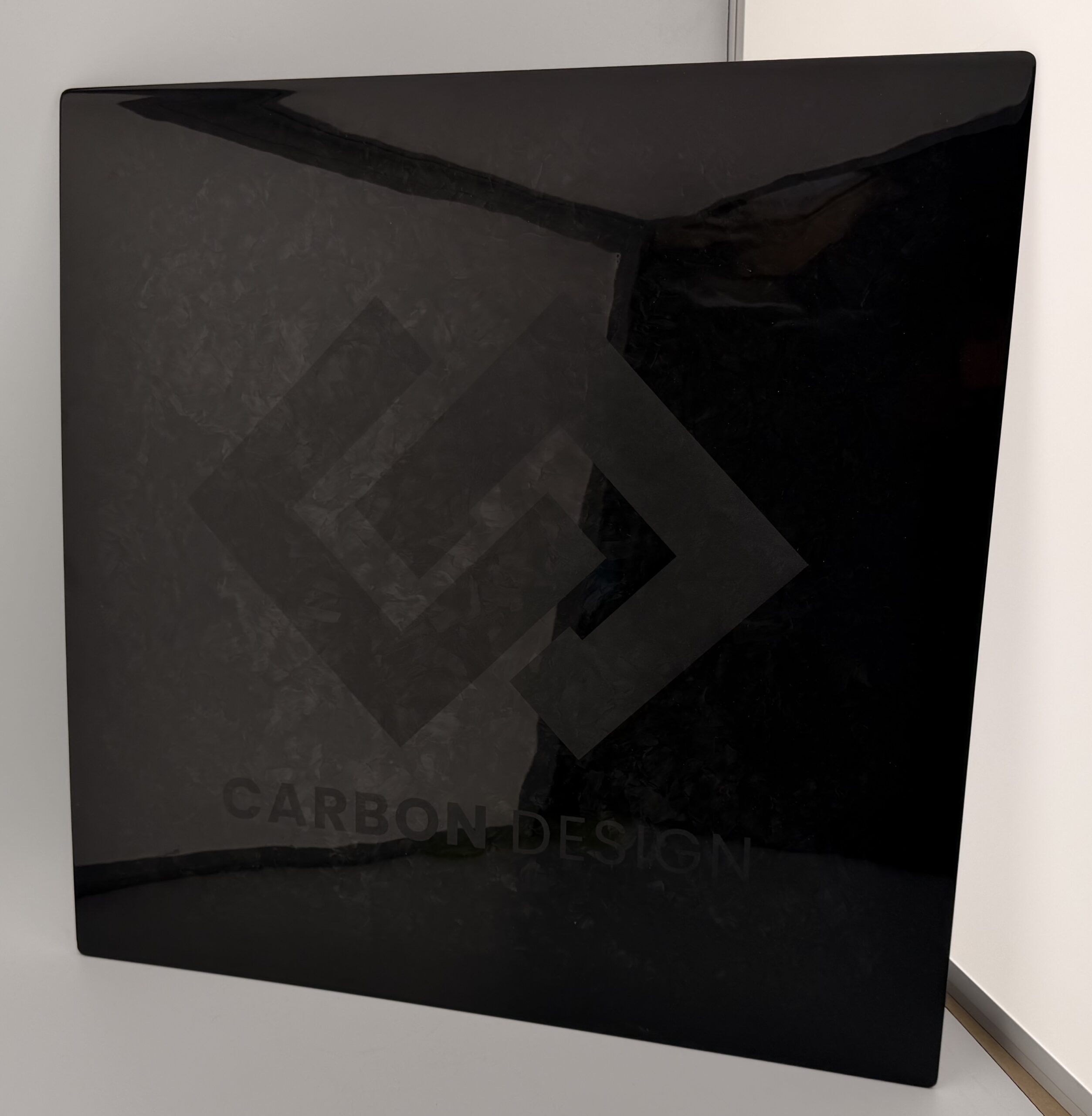 Composite plates 1–30 mm: forged carbon, carbon, aramid, glass
500×500 mm composite plates 1–30 mm thick – forged carbon, carbon, aramid, glass and their combinations – for CNC machining and premium…
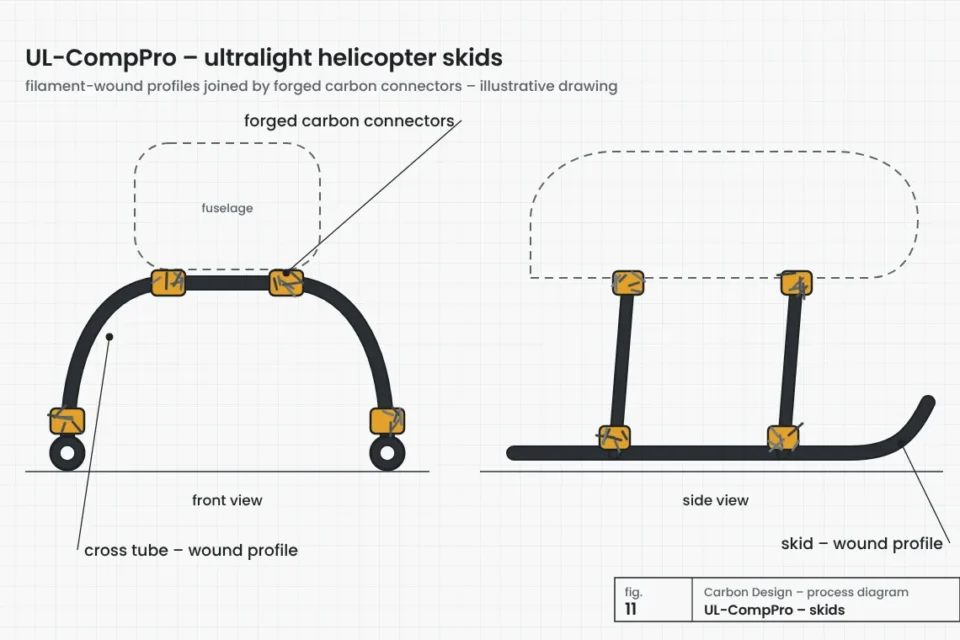 UL-CompPro: ultralight helicopter skids
An AMULET (1st call) project with East 4D Carbon Technology GmbH: skids made of filament-wound profiles and forged carbon connectors.
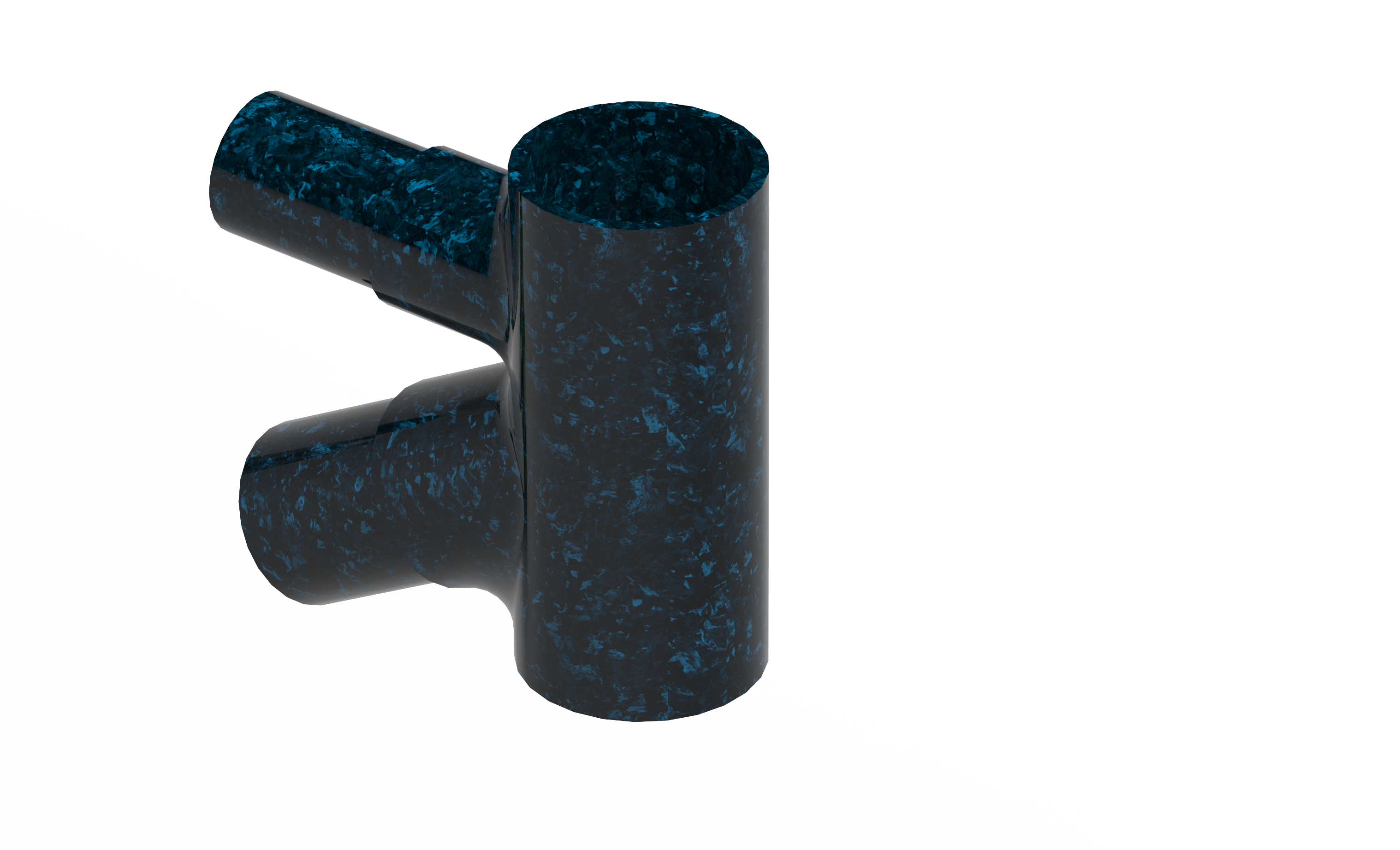 Hollow forged carbon parts without cutting the fibres
A series method for making hollow, high-strength forged carbon parts in which the fibres are not cut or shortened. Waste approx. 0.5% of the…
Other technologies
Need help choosing?
Send us a description of the part and the planned quantity – we will propose the process and explain why.
Have a drawing or just an idea? We will tell you how to make it.
Tell us what the part has to do, how many you need and what the requirements are. We will reply with a proposed process, material and next steps – with no obligation, under NDA if needed.