
Custom carbon fibre parts
We make carbon fibre and other composite parts from your drawing, 3D model or description – from prototype to series production. We choose the process ourselves: you do not need to know whether the part will be forged carbon, RTM or prepreg.
What we make
The most common kinds of parts. Each link leads to the process we usually use for them.
Nodes, connectors and structural parts
Joints, brackets, arms and connectors with complex 3D shapes – including hollow ones.
Housings, covers and lids
Parts with two finished surfaces, in visible carbon or ready for paint.
Panels and large parts
Panels, shells and covers – from a few tens of centimetres to large formats.
Profiles, frames, tubes and shafts
Constant- and variable-section profiles, frames and arms filled with a core.
Plates and semi-finished products
500×500 mm composite plates 1–30 mm thick – forged carbon, carbon, aramid, glass and their combinations – for CNC machining, blanks and semi-finished products.
Prepreg parts
High-stiffness, low-porosity parts cured in RAT or out of autoclave.
Materials
Carbon, glass, aramid, basalt and natural fibres. Epoxy, bio-based and vinyl ester resins. We choose the material for the loads, operating temperature, appearance and cost – and verify the choice with FEM calculations.
More on materials and processes: composite manufacturing technologies.
How many parts – which process
The quantity decides the mould, and so the start-up cost and the cost of each part. The table shows the usual choice; we propose the final one after analysing your part.
| Volume | Typical processes | What you gain |
|---|---|---|
| Prototype, 1–10 pcs | machining from a forged carbon plate, prepreg on a composite mould (RAT, OOA), infusion | short start-up, low-cost mould |
| Small series, 10–500 pcs/year | RAT, OOA, vacuum infusion, light RTM in a composite mould | low mould cost, prepreg laminate quality |
| Medium series, 500–5,000 pcs/year | light RTM and RTM, PCM and WCM compression moulding, forged carbon | repeatable thickness and mass, shorter cycle |
| Large series, over 5,000 pcs/year | forged carbon (C-SMC, C-BMC), PCM and WCM, RTM | cycle measured in minutes, lowest cost per part |
Part size
The size limit depends on the process. In compression moulding it is set by the press force and the mould size – we have 160 t and 40 t hydraulic presses. In vacuum infusion and on single-sided moulds it is mainly the mould. Send us the dimensions and we will tell you whether we make it in our plant or with a partner under our supervision.
Examples
Projects we can talk about publicly.
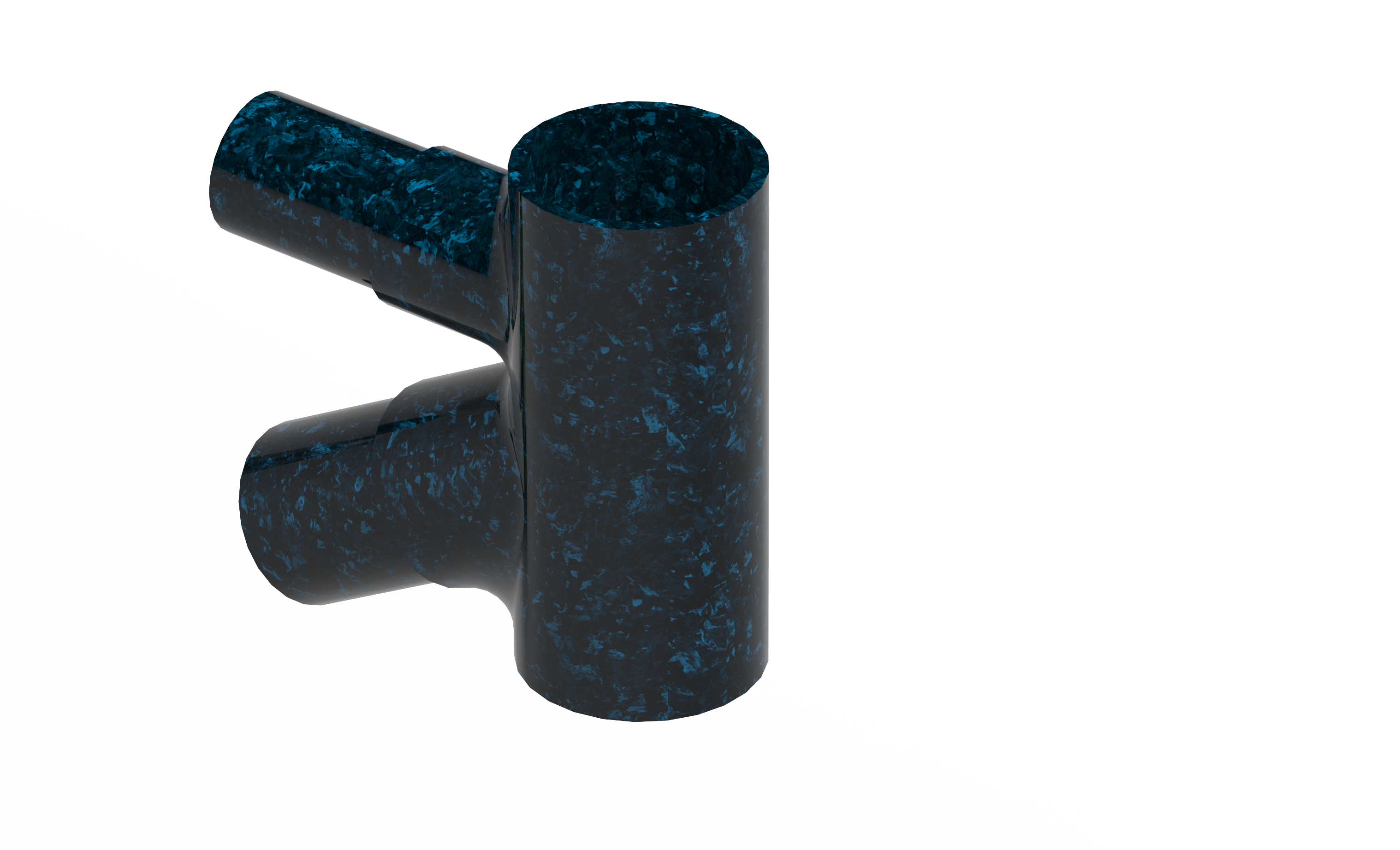
Hollow forged carbon parts without cutting the fibres
A series method for making hollow, high-strength forged carbon parts in which the fibres are not cut or shortened. Waste approx. 0.5% of the part mass, patent pending.
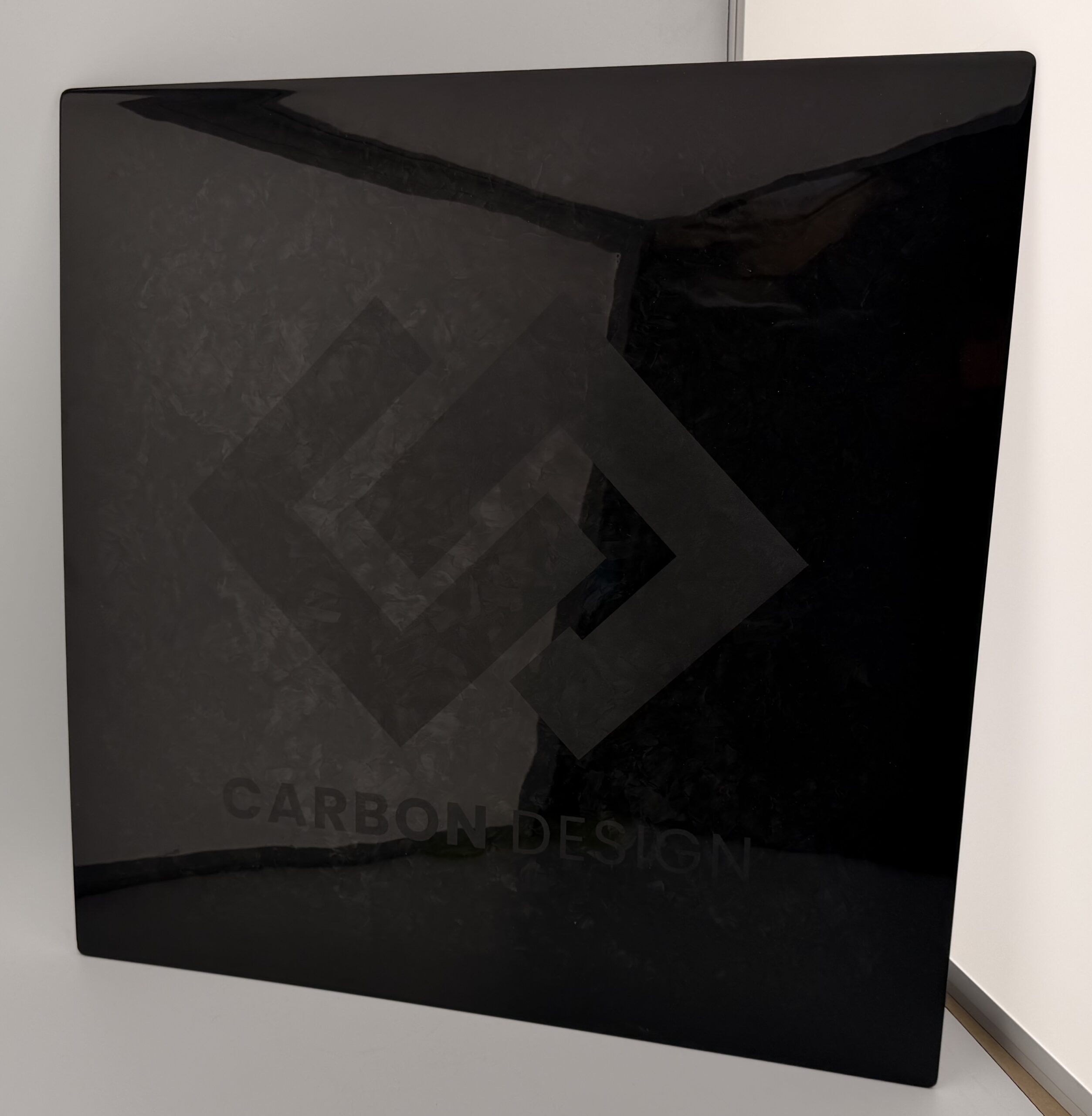
Composite plates 1–30 mm: forged carbon, carbon, aramid, glass
500×500 mm composite plates 1–30 mm thick – forged carbon, carbon, aramid, glass and their combinations – for CNC machining and premium finishes.
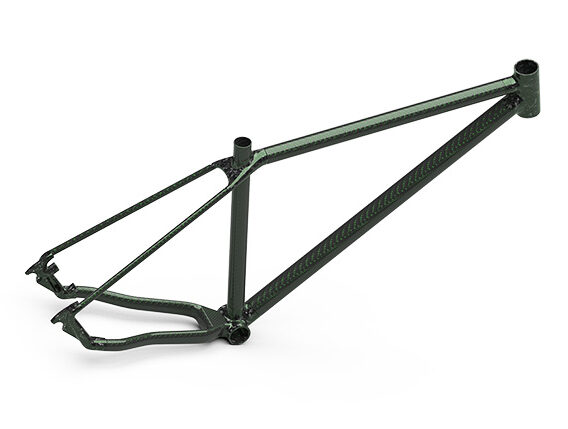
Series production process for carbon fibre bicycle frames
A series production process for carbon fibre bicycle frames that is cheaper and faster than the conventional one.
What to send for a quote
A description and a sketch are enough – you do not need a technical drawing. Attach files to the form or send them after we sign an NDA.
- 3D model – ideally a native Siemens NX / Designcenter file (.prt), also Parasolid (.x_t, .x_b), STEP or IGES – or a 2D drawing with tolerances
- Loads and operating environment: temperature, chemicals, UV, moisture
- Planned quantity: prototype, annual volume, whole project lifetime
- Surface requirements: visible carbon, painted, class A
- Deadline and any industry standards or certificates that apply
Questions and answers
How much does a carbon fibre part cost?
It depends on the geometry, the material, the surface requirements and the quantity. In small quantities the mould and labour make up most of the price; in large ones it is the material and the cycle time. We quote after analysing your drawing or description.
Do you make one-offs and prototypes?
Yes. We make prototypes from forged carbon plates, from prepreg on composite moulds or by infusion – so that the move to series production does not require a redesign.
Can you produce to our drawing or in our mould?
Yes. We work from customer documentation and in customer-supplied moulds, and we also redesign metal or plastic parts for composites.
How long does it take?
It depends on whether a new mould is needed. We give a schedule in the quotation after analysing the part.
Do you sign NDAs?
Yes, most projects run under a confidentiality agreement. We can sign yours or send our mutual NDA template.
Have a drawing or just an idea? We will tell you how to make it.
Tell us what the part has to do, how many you need and what the requirements are. We will reply with a proposed process, material and next steps – with no obligation, under NDA if needed.